ootdbuy Base Layers: Warmth vs Sweat Debate
ootdbuy Base Layers: Warmth vs Sweat Debate
ootdbuy Base Layers: Warmth vs Sweat Debate
Disagreements about warm base layers for commuting aren't just about "how thick"; they're about the trade-offs between warmth, sweat-wicking, transitions between indoors and outdoors, and activity level. Some people prioritize heat retention during cold walks, while others worry more about overheating and sweating once they get on the subway, into the office, or into a mall. Both perspectives can be valid because they apply to different use scenarios.
The goal of this article is to help users who plan to filter base layers on ootdbuy break down subjective feelings from the community into verifiable product information and complete a screening that suits their own commute route before placing an order. The article does not treat any single comment as a universal conclusion, nor does it claim that the editorial team has personally purchased, worn, or tested the products mentioned.
This article is produced by the Panda-Buy Editorial Desk from an editorial perspective, based on visible product information, commute scenario analysis, and pre-publication fact-checking methods. It does not package automated aggregation as real-person try-on or hands-on experience reports. Prices, stock, fabric, sizing, logistics, and after-sales conditions should all be re-confirmed before actually placing an order.
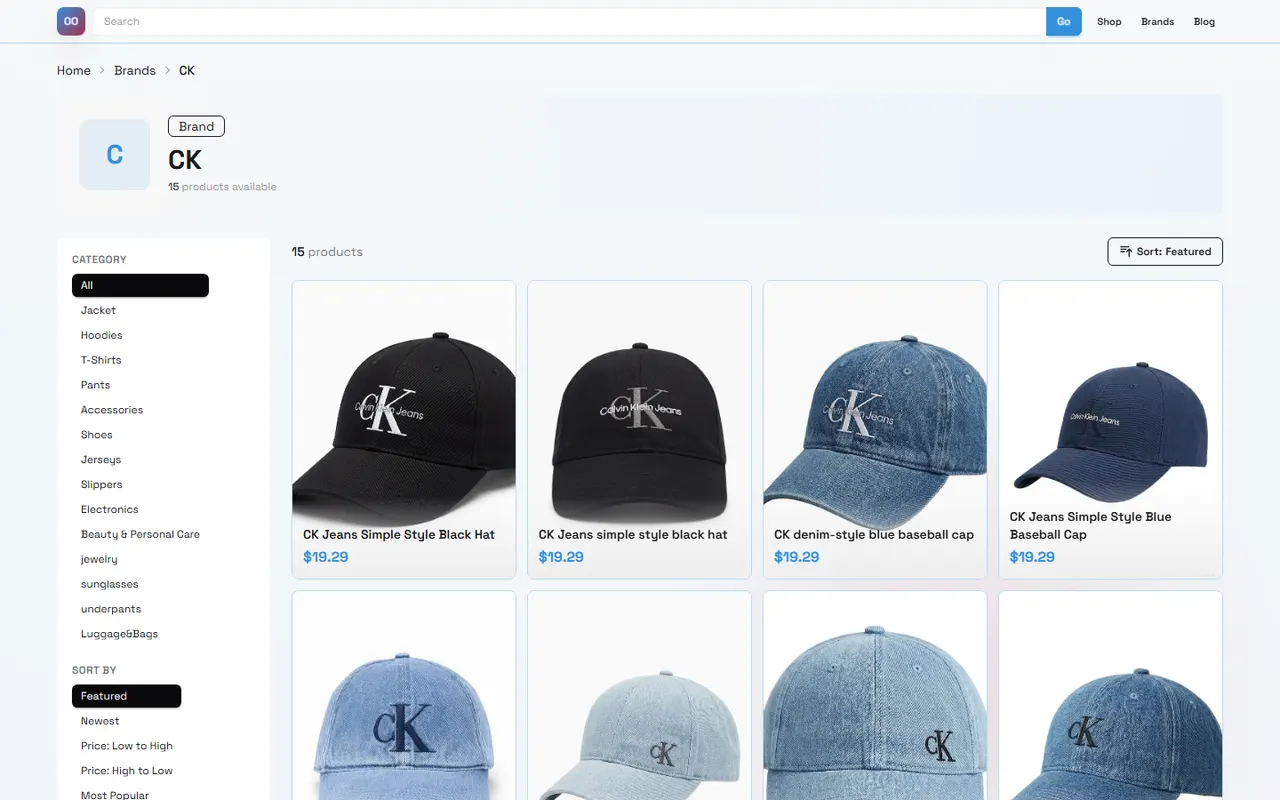
Image: Example of a brand directory page on ootdbuy. This image is used to illustrate the filtering interface and category information; it cannot replace the base layer product details, fabric labels, or actual QC photos.
First Define the Actual Task of Commute Base Layers
Don't start by asking "which one is warmest"; instead, first answer which problem you need to solve every day:
You spend a long time walking outdoors in the morning and evening and need to reduce the chill from cold wind.
You easily sweat after going from outdoors into the subway, office, or mall because you're wearing too much.
You have a high activity level during your commute and want the inner layer to not get cold quickly from sweat.
You need to layer under a shirt, knitwear, or jacket and can't accept obvious bulkiness.
You often experience rapid temperature changes between cold outdoors and warm indoors.
After reading this article, you should be able to complete one specific action: based on your outdoor exposure time, activity intensity, indoor temperature, and sweating situation, shortlist two to three candidates, then check fabric, thickness, sizing, and product details item by item.
This article does not apply to people who need professional outdoor gear, extreme cold protection, medical warmth advice, or special skin care. Ordinary commute base layers cannot replace professional clothing designed for severe cold, prolonged outdoor work, or high-risk environments.
Warmth Factors That Recur in Community Opinions
The common "warm or not" in community discussions usually mixes several different indicators: the fabric's inherent insulating ability, fabric thickness, fit, outer layer wind resistance, and the wearer's activity level that day. If you only look at labels like "fleece-lined", "thick", or "winter style", it's easy to conflate different factors.
When judging warmth, you can break opinions into the following categories:
Fit: Too much space between the base layer and skin may affect insulation; but excessive compression may also reduce comfort.
Thickness and loft: These usually affect warmth and layering space, but thick does not automatically mean suitable for indoor-outdoor transitions.
Surface density: A denser fabric may reduce cold wind impact, but still needs to be judged in combination with outer clothing.
Waist, cuffs, and collar: The fit in these areas affects cold air entry and also affects comfort during movement.
Activity level: Standing waiting for a bus, cycling, brisk walking, and sitting in an office for long periods have different warmth needs.
Community opinions can help you discover variables that need checking, but they cannot make the judgment for you. For example, "thin but very warm" may come from low activity, a warm coat, or personal cold tolerance; "feeling cold when wearing" may be related to loose sizing, a drafty outer layer, or not drying off after sweating. 🧥
Common Disagreements About Sweating, Stuffiness, and Moisture Wicking
"Warmth" and "sweat-wicking" are not completely opposite choices, but in actual wear, they often require trade-offs. An overly thick insulating layer may cause high-activity commuters to heat up quickly after entering indoors; insufficient moisture-wicking ability may keep sweat near the skin, leading to feeling cold again outdoors.
When discussing sweating issues, it's recommended to break "stuffy" into three situations:
Too hot: The garment has strong insulating ability, but commute activity or indoor heating prevents body heat from dissipating in time.
Moisture retention: The fabric or structure is not conducive to sweat vapor diffusion, and the garment becomes uncomfortable when damp.
Fit compression: Tightness in the shoulders, armpits, or chest makes it feel not breathable during movement, but this does not necessarily mean the fabric's moisture-wicking is poor.
Therefore, community opinions like "thicker is better" and "it must be very thin to not sweat" may both be oversimplifications. A more reliable approach is to put candidates back into the use scenario: if you only walk outdoors for ten minutes and stay indoors for eight hours, an overly thick base layer may not be suitable; if you need to wait outdoors for a long time, cycle, or walk in the early morning, an overly thin style may not be enough. 🌡️
How to Distinguish Personal Feelings from Verifiable Product Information
Community feelings can serve as topic leads, but cannot replace product details. Before ordering, you should convert adjectives in reviews into verifiable questions.
"Very warm" can be converted into: Does the product description specify the insulation structure, is there fleece lining or a specific knitting method, is the thickness suitable for layering, and how are the cuffs and collar designed.
"Not stuffy" can be converted into: What is the fabric composition, is there any moisture-wicking or breathability description, is the product labeled with applicable seasons, and will the sizing cause excessive snugness.
"True to size" can be converted into: Are the reviewer's height, weight, body type, and chosen size close to mine; does the product page provide actual measurements like garment length, chest, sleeve length, or inseam.
"Deforms after washing" can be converted into: What are the care instructions, does the fabric contain elastane, and is there any record of dimensional change in key areas. If the page lacks this information, record it as a to-be-confirmed item rather than inferring it yourself.
On ootdbuy product pages, prioritize checking the following:
Whether the product name clearly indicates a thermal base layer, long johns, or base layer, and not a regular T-shirt or loungewear.
Whether the fabric composition and inner layer structure are clearly displayed.
Whether the size chart includes specific measurements rather than just letters like S, M, L.
Whether the product images clearly show the collar, cuffs, waistband, and inner structure.
Whether there are current status details like color, size, stock, and price.
Whether the page explains after-sales, return/exchange conditions, or hygiene-related restrictions that may affect returns.
Price, stock, and available sizes are highly volatile information. This article does not treat the current price, stock, or "best buy" conclusion of any specific model as fixed facts; before publishing or ordering, you should reopen the corresponding product page to verify the date and destination country conditions.
Organize Opinions by Activity Intensity and Indoor-Outdoor Transitions
Rather than ranking by "warmest" or "thinnest", it's more suitable to filter by commute route. The following categories are decision frameworks, not guarantees of specific product performance.
Low-activity commutes typically include short walks, public transportation, and long office hours. These scenarios require more control over thickness and indoor comfort. Candidates can prioritize medium thickness, a snug but not overly compressive fit, and confirm whether the outer layer already provides the main wind protection.
Medium-activity commutes include longer walks, frequent transfers, or standing outdoors waiting for a bus. Here, you need to balance warmth and moisture wicking; you can't just look at whether the inner layer is thick. You should also check fabric descriptions, underarm and back construction, and whether it's easy to regulate temperature by removing the outer layer after entering indoors.
High-activity commutes include cycling, brisk walking, long outdoor distances, or continuous activity at work. These scenarios are more prone to sweating, and the priority may shift from "maximum warmth" to "staying dry and avoiding clamminess". If product details only emphasize thickness without sufficient fabric and construction information, you should not judge suitability for high-activity use based on promotional language alone.
When there's a significant temperature difference between indoors and outdoors, layering is often easier to adjust than simply increasing base layer thickness. The base layer serves as the snug foundation, the outer layer handles wind and warmth, and the mid layer can be added or removed according to temperature changes. The advantage is that you can remove a layer after entering indoors, rather than having an entire base layer that cannot be adjusted. 🧣
Sizing and Fabric Information to Confirm Before Ordering
Base layer sizing cannot be decided solely based on your usual T-shirt size. Snug-fitting styles usually require attention to chest, waist, hip, garment length, sleeve length, and inseam; if the product emphasizes stretch, also confirm whether the size chart gives a suitable range.
It's recommended to compare your body measurements with the product page data item by item, and record the following:
The units on the page's size chart: centimeters or inches.
The measurement method: body measurements or garment flat measurements.
Whether tops and bottoms need to be selected in separate sizes.
Whether the collar, cuffs, leg openings, and waist have noticeable tightening designs.
Whether you plan to layer shirts, knitwear, or thermal layers over the base layer.
Whether there are page differences among colors, sizes, or styles for the product.
Regarding fabric, don't equate a single fiber content directly with wear performance. The same fiber ratio with different knitting methods, weight, inner structure, and fit can result in different feels. When the page does not clearly state, retain uncertainty and consider confirming the actual label, inner condition, and workmanship through QC photos, rather than letting a single "very comfortable" comment bear all the judgment.
Before purchasing, also check after-sales conditions. Intimate apparel may be subject to hygiene, opened packaging, or usage status restrictions; specific return/exchange rules are subject to the actual product page and order process. Don't infer that all orders have the same conditions just because someone in the community successfully returned or exchanged.
A Decision Checklist for Base Layers Worth Recording
You can put candidate products into a simple record table to avoid being swayed by a single highly emotional review:
Items to record | How to check | What to do if unconfirmed |
|---|---|---|
Commute scenario | Record outdoor exposure, activity level, and indoor duration | Don't rush to choose the thickest style |
Fabric and structure | Check composition, inner layer, thickness, or knitting description | Mark as to-be-confirmed |
Sizing | Compare specific measurements and fit description | Don't infer directly from letter sizes |
Sweat risk | Determine if high activity or frequent temperature changes | Prioritize adjustable layering |
After-sales restrictions | Review product page and order process | Keep screenshots or record date before ordering |
QC focus | Confirm label, workmanship, color, and size | Lower purchase priority if information is insufficient |
When recording community opinions, it's best to keep the context of the comment: the commenter's climate, activity level, number of layers, size choice, and usage duration. Without this background, "warm", "thin", or "not stuffy" can only serve as leads to be verified, not universal guarantees. 📝
Final Action: Filter Candidates Based on Your Commute Scenario
You can now complete the filtering in the following order:
Write down the approximate time you spend outdoors each day, and the segments where you most easily feel cold or hot.
Determine whether the main problem is insufficient warmth, stuffiness after entering indoors, or clamminess after sweating.
On ootdbuy, filter for products explicitly labeled as thermal base layers, long johns, or base layers.
Check fabric, inner structure, size chart, price, stock, and after-sales conditions one by one.
Rewrite community opinions into verifiable questions; do not treat a single comment as a product guarantee.
Before ordering, reconfirm destination country, currency, product status, and current page information.
After receiving warehouse QC photos, check labels, size, color, obvious stains, damage, and workmanship; if problems are found, pause consolidation and handle after-sales first.
If your commute mainly involves short outdoor time and long indoor time, it's usually not recommended to pursue only the thickest or strongest fleece; instead, prioritize candidates that are easy to layer with outerwear and won't overheat during temperature changes. If you spend long hours outdoors every day with low activity and limited outer layer wind protection, the warmth weight can be increased, but you still need to check sizing and fabric information.
If your main concern is sweating, don't buy based solely on the word "lightweight". Lightweight may just mean low thickness and does not necessarily mean better moisture wicking. You should prioritize products with clear composition, construction, and sizing information, and leave room for temperature regulation through layering.
Finally, the value of community opinions lies in helping you discover problems, not in making a ranking divorced from your scenario. When choosing ootdbuy products, the most reliable path is: first define the commute task, then verify product evidence, and finally use QC and after-sales information to reduce uncertainty. This way, you can avoid sacrificing indoor comfort for "maximum warmth" and reduce the risk of misjudging sweat and moisture-wicking performance due to a single comment.
Browse our latest products and find your next favorite item.