ootdbuy Dress Shoes: Repair or Replace?
ootdbuy Dress Shoes: Repair or Replace?
ootdbuy Dress Shoes: Repair or Replace?
When commuter dress shoes develop worn soles, separated glue, creases, or damaged hardware, the real question isn't "can they be repaired," but whether they can still reliably meet commuting needs after repair and whether the repair cost is less than the remaining reasonable use value.
This article provides a decision-making method for viewing product pages on ootd-buy.net, inspecting items upon receipt, or evaluating existing shoes. It does not judge the actual material, inventory, price, or lifespan of any specific pair, because no specific product page, physical measurements, or repair quotes were available for item-by-item verification. For content involving page information, prices, replaceable parts, and after-sales conditions, please refer to the actually visible information and local repair shop quotes as of August 30, 2026.
This article is suitable for commuter shoes whose basic structure is still intact and where you are considering repair or replacement; it is not suitable for shoes that are severely deformed, have hygiene contamination, or affect walking safety.
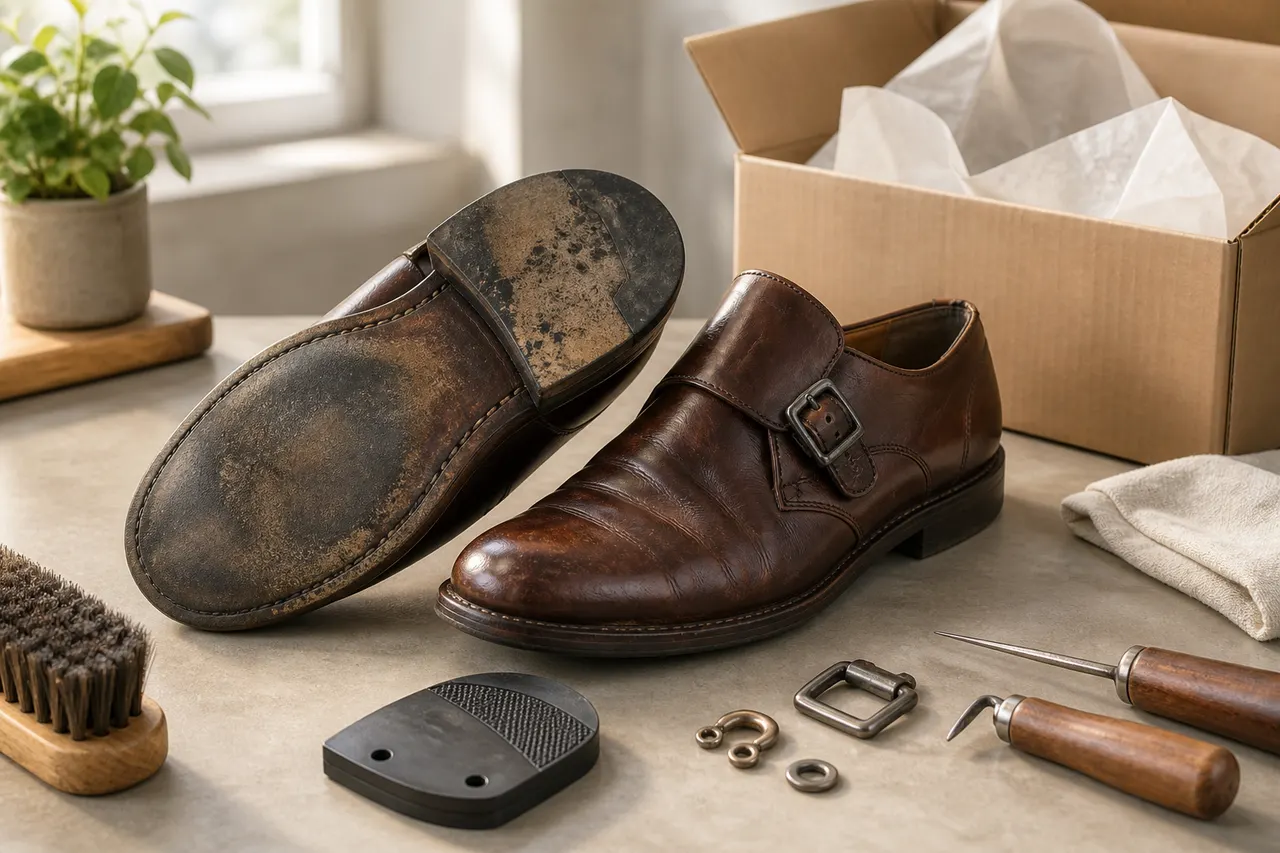
Clarify the Decision Goal: Repair, Replace, or Keep Wearing
First, determine what tasks this pair will handle next. Daily walking and public transportation require high demands on slip resistance, sole stability, and lining integrity; only wearing for short periods in the office can accept minor appearance wear. 👞
The final choice should be one of three outcomes:
Continue using as primary commuter shoes after repair.
Downgrade to office backup shoes or short-distance wear without high-cost repair.
Stop using and replace to avoid further repair costs or safety risks.
Do not decide based solely on the original purchase price. Expensive shoes may not have a replaceable outsole structure, and cheap shoes are not necessarily without repair value. More important is whether the damage is concentrated in replaceable parts and whether the upper and main structure can support the next round of use.
Evidence Boundaries: What Images Can Determine and What Must Be Confirmed Physically
Product images, seller photos, or receipt photos can help observe outsole patterns, stitching positions, upper cracks, heel tilt, and missing hardware, but images cannot reliably prove leather type, glue strength, internal padding condition, odor, slip resistance, or comfort. Images that have been compressed, sharpened, or brightly lit may also hide fine cracks and color differences. 🔍
Based on images alone, you can preliminarily judge:
Whether outsole wear is concentrated on the outer heel or forefoot pressure areas.
Whether there are through-surface cracks in the upper, not just normal crease lines.
Whether the heels are unequal height and whether decorative parts are missing.
Whether the sole has visible stitching, a separate heel piece, or other structures that may be easy to disassemble and replace.
Must be confirmed physically:
Whether the sole becomes powdery, abnormally soft, or makes delamination sounds when pressed lightly.
Whether the toe and waist are twisted, and whether the left and right shoes lose symmetry.
Whether the lining damage has formed hard edges and rubs the foot.
Whether the zipper closes continuously, and which part among the teeth, slider, and fabric tape is damaged.
Whether grip on wet surfaces still meets daily commuting needs.
If the sole is broken, the heel is loose, metal sharp edges are exposed, or the shoe is noticeably unstable, stop wearing and do not use a short test walk as a substitute for a safety check.
Inspect Outsole Wear Location and Remaining Structure
After cleaning and drying the soles, place them on a flat table and inspect from the back, side, and bottom. Don't just look at whether the tread is shallow; also check if wear has changed the standing angle.
Slight uneven wear on the outer heel can usually be handled by replacing the heel piece, provided the wear has not entered the heel body. If the forefoot tread is shallow but the bottom layer is still even, you can ask whether adding a protective forefoot sole is suitable. If wear has penetrated the outsole and exposed the middle structure, the repair scope and cost will expand.
Be alert to the following:
Large areas of outsole delamination, along with aged or hardened soles.
Transverse cracks at the sole flex points that continue to open under stress.
Significant difference in wear between left and right shoes, accompanied by heel tilt.
Multiple cracks at the sole edges that do not recover when pressed.
Original structure is a molded one-piece sole, and the damaged area cannot be separately replaced.
Local delamination does not mean just regluing. The repairer must also determine whether old glue can be cleaned, whether the bonding surfaces are intact, and whether the delamination is caused by shoe deformation. Using hard glue unsuitable for shoe materials may make flex points brittle and increase the difficulty of later professional repair.
Examine Upper Creases, Cracks, and Lining Damage
Shallow creases in the forefoot flex area of commuter shoes are common. The key to judging value is whether the creases have developed into surface peeling, cracks, or structural thinning. 🧵
First observe under natural light, then gently support the corresponding area from inside the shoe with your hand. If the surface color changes but the touch is still continuous, it is usually a cosmetic maintenance issue; if the crack opens when slightly bent, or the surface peels off in flakes, it is difficult to restore structural strength through coloring. Care products can improve some dry appearance, but cannot turn broken material back into a complete upper.
Don't ignore the lining. Slight fuzz on the heel lining may only need a local patch; if the lining has a hard edge or exposed padding, continued wear will increase friction. If damage appears on the collar, heel, and inner forefoot at the same time, repair is no longer a single-point project, and accumulated labor may exceed the remaining value of the shoe.
Also check for odor, mold, and deformation from moisture. Surface cleaning cannot prove the interior is safely dry. If there is persistent musty smell, widespread mold, or contamination from unknown sources, it is not advisable to continue using to save purchase costs.
Evaluate Heel, Zipper, and Decorative Hardware Replacement
Independent heel pieces, common slider sizes, and removable decorative buckles are usually more suitable for individual repair than the main upper. But "looks removable" does not necessarily mean there are matching parts; color, size, hole position, and fixing method need to be verified. 🔧
Part condition | Preferred choice | Signal to replace entire shoe |
|---|---|---|
Heel piece worn, heel body upright | Ask about replacing heel pieces in pairs | Wear has entered the body, heel loose or tilted |
Slider damaged, teeth and tape intact | Ask about replacing only the slider | Missing teeth, torn tape, or deformed zipper path |
Decorative buckle loose, fixing hole intact | Re-fix or replace in pairs | Fixing position torn, replacement will continue to pull the upper |
Metal parts discolored but no sharp edges | Accept appearance wear or replace | Rust, breakage, or sharp corners may scratch skin |
Exposed hardware on left and right shoes should generally be handled in pairs, otherwise color and gloss differences may be noticeable. If decorative parts also serve a closing or supporting function, treat them as functional, not purely cosmetic.
Compare Costs Using Repair Items and Future Usage Frequency
First get itemized quotes from local repair shops, then calculate, rather than guessing based on generic online prices. It is recommended to write total repair cost as:
Total repair cost = repair quote + round-trip shipping or transportation cost + care materials + replacement shoe cost during repair.
Then estimate a conservative number of uses after repair. Do not use the longest lifespan that repair shops cannot guarantee; set a cautious usage period based on your commuting frequency:
Post-repair cost per use = total repair cost ÷ estimated actual wearing times.
The replacement option should use the same caliper:
New shoe cost per use = total delivered cost ÷ conservative estimated wearing times.
For example, if repair involves heel piece, lining, and hardware, even if each item seems low, the total may approach the delivered cost of replacement shoes. Conversely, if the upper is in good condition and the fit is confirmed, and only a standard heel piece needs replacement, repair can reduce the risk of breaking in new shoes and size mismatch.
Repair is recommended only if all of the following are met:
Damage is concentrated in one to two replaceable parts.
Upper, load-bearing sole structure, and left-right symmetry are good.
Itemized quotes are clear, without many unknown costs to be determined after disassembly.
The shoes will still be worn frequently after repair, not just kept because of reluctance to discard.
Replacement is recommended if the main structure is damaged, repair items are interdependent, or repair cannot restore safety, comfort, and stability. Low repair cost cannot offset the commuting risks of slipping, foot rubbing, or temporary failure.
Before Ordering: Verify Repairable Structure and Replacement Parts
When viewing commuter dress shoes on ootd-buy.net, rely on the information actually shown on the current product page. There is no specific product URL this time, so cannot confirm any style's price, material, stock, seller promise, or repair structure. Information not written on the page should be considered unknown, not inferred from appearance images. 📦
Before ordering, save and verify the following evidence:
Product name, style number, size options, and page check date.
Clear images of sole side, bottom, heel connection, and closure parts.
Original text of upper, lining, and outsole material descriptions; do not upgrade to a leather conclusion based on marketing descriptions like "leather-like."
Whether the heel piece is independent, whether the outsole has visible stitching, and how decorative parts are fixed.
Whether matching spare heel pieces, shoelaces, sliders, or decorative parts exist and whether they are provided with the shoes.
Inspection upon receipt, feedback, return/exchange conditions, and time requirements.
If the platform purchase process includes order confirmation, warehouse inspection, or supplementary image steps, use that to verify the correct style, size, and color, and observe visible flaws; if the page does not provide these functions, do not assume additional checks can be added. When key structures are unclear, ask specific questions before payment, such as requesting to show the sole flex point or heel fixing position, rather than just asking "is the quality good?"
After receiving the goods, complete indoor inspection without affecting return/exchange conditions. Keep packaging, page information, and problem photos, confirm processing window first, then decide whether to glue, drill, or replace parts yourself; any irreversible operation may affect subsequent handling.
Make the Final Decision: Repair, Downgrade, or Replace
After inspection, use the following sequence to decide:
First, rule out safety issues. Stop wearing if sole is broken, heel is loose, sharp hardware is exposed, or severe instability.
Next, judge the main body. If upper has large cracks, shoe is deformed, or multi-layer structure is aged, it is usually not worth continuing with local repairs.
Confirm whether damage is replaceable. If heel piece, slider, or local lining has a clear repair path, obtain quotes.
Compare post-repair cost per use with new shoe cost per use, including fit, replacement need, and repair failure risk.
Choose repair, downgrade, or replacement based on future usage frequency, and record decision basis to avoid repeated small repairs on the same pair.
What repair can truly save is the delivered cost of new shoes and break-in cost; added risks include hidden aging, uncertain repair outcome, downtime, and multiple issues appearing consecutively. It is more suitable for people whose upper and load-bearing structure are good, damage is concentrated, fit is confirmed, and will still wear frequently.
Conditions not recommended for repair include main body cracks or deformation, sole material powdering, heel instability, unresolved hygiene issues, unmatched replacement parts, and total repair cost close to the delivered cost of acceptable replacement shoes. If the shoes are still safe but no longer suitable for formal commuting, they can be downgraded to indoor backup shoes; if safety cannot be confirmed, do not continue using by downgrading purpose.
This guide is compiled by Panda-Buy Editorial Desk's automated editing process, based on verifiable inspection methods rather than personal wearing experience. Specific product facts, platform page status, and repair quotes must be re-verified on the day of action.
Agent Platform Shopping FAQ
1. How can I judge the quality of products on ootd-buy.net?
To judge product quality, look at QC photos—don't rely solely on factory photos, as they are often retouched. Use QC photos to confirm whether the product meets your specific requirements for details before deciding to actually purchase. Also, remember to avoid products with extremely low prices, as they are usually not of good quality.
2. Why doesn't ootd-buy.net use Google Sheets?
Google Sheets is only suitable for spreadsheets with a small number of products. Once the number of products increases, loading becomes very slow and the system lags severely. Especially on mobile devices, the visual experience is poor and searching for products is inconvenient. For the same product set, ootd-buy.net's spreadsheets load faster and provide a better visual experience.
3. What types of products can I find in ootd-buy.net's spreadsheets?
oootd-buy.net's spreadsheets cover shoes, clothing, bags, accessories, jerseys, perfumes, hats, scarves, belts, and various household daily necessities.
4. Is ootd-buy.net's spreadsheet website safe?
This website does not collect any personal information; it only serves as a product catalog for the agent platform. All transactions are conducted on the agent platform.
5. What types of products are available on ootd-buy.net?
oootd-buy.net offers a wide range of product categories, including shoes, T-shirts, sweaters, hoodies, jeans, sweatpants, shorts, beach pants, factory clearance items, down jackets, baseball shirts, shirts, hats, jewelry, bags, electronics, sunglasses, socks, underwear, and trendy collectibles.
Browse our latest products and find your next favorite item.